Photo via Wikimedia Commons — licence & author.
Foel Fenlli Hillfort
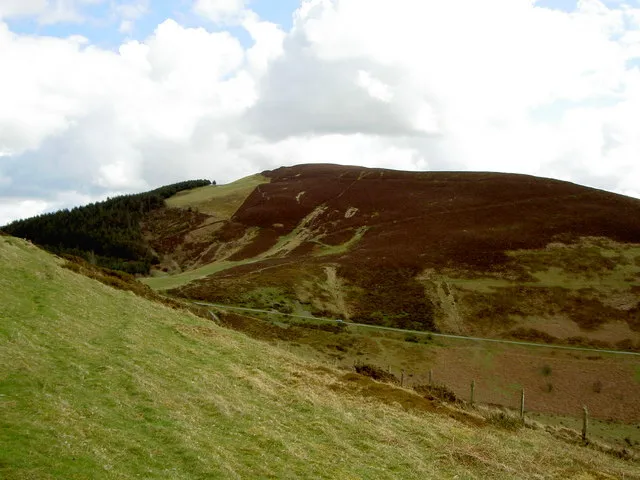
Moel Famau's darker twin: shorter, steeper, older — a 511-metre summit wrapped in Iron Age ramparts you can walk like the wall of a drum.
- Hillfort atmosphere
- Short fierce climbs
- Sunset circuits
- Escaping Moel Famau's crowds
✅ Walked & checked: July 2026 · themes: Ancient sites·Walks & hills
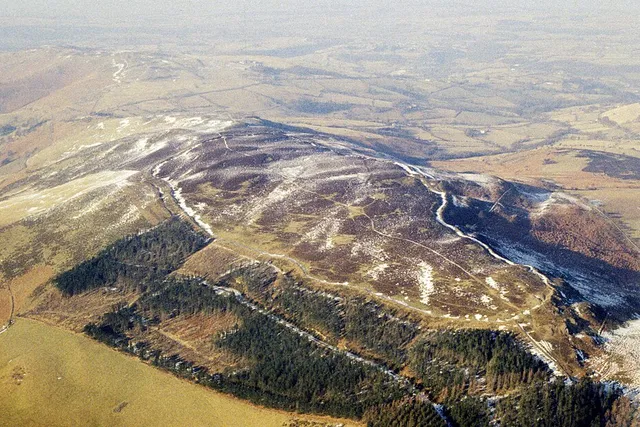
From the Vale of Clwyd, Foel Fenlli reads as Moel Famau’s shadow — slightly lower, steeper-sided, darker with heather. From the top of Fenlli, that impression reverses: this is the hill with the story. You stand inside a fortress older than Rome’s arrival in Britain, its double ramparts still curling round the summit like a raised eyebrow.
What it’s actually like
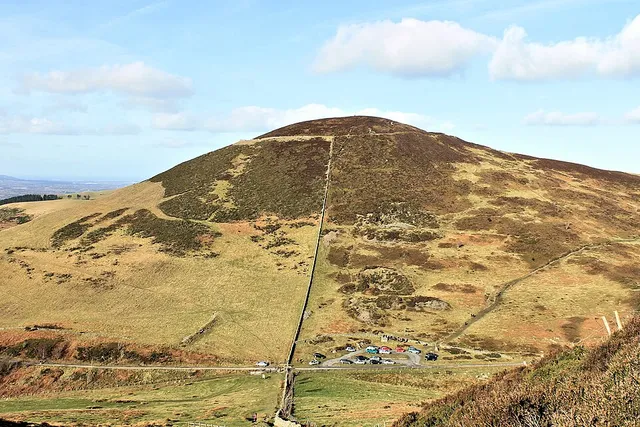
The climb from Bwlch Penbarras is the Clwydians’ best short shock: stone steps straight up the northern rampart, calves complaining, the car park shrinking absurdly fast below. Then, suddenly, you’re through the ancient entrance gap and the ground levels into a broad tilted plateau ringed by banks. Walk the rampart circuit anticlockwise — the outer ditch is deepest on the west, the Vale 300 vertiginous metres below — and count house platforms in the heather; archaeologists log more than thirty, home to a community that watched this valley over two thousand years ago.
The summit cairn is Bronze Age, centuries older than the fort itself, and a hoard of 1,500 Roman coins turned up in the ramparts in the nineteenth century — this hill has been meaningful to somebody for four thousand years. In late August the heather turns the whole fort purple and the bees are deafening.
Getting there and parking
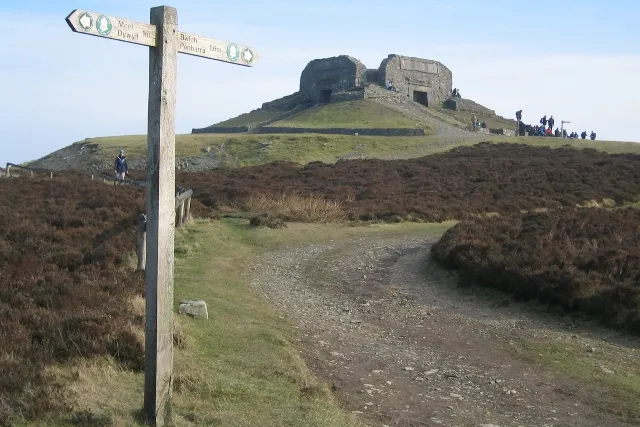
Same trailhead as its big sibling: Bwlch Penbarras car park at the crest of the Old Bull Road (pay-and-display, fills fast on fine weekends — grid reference in the facts panel). The path leaves the car park’s southern end, directly opposite the Moel Famau path: left for legend, right for tea-tray views. Mist turns the summit plateau disorienting; save it for a clear evening, which is when it’s at its best anyway.
Make a day of it
The obvious move is the two-summit round with Moel Famau — our circular route includes the Fenlli extension. For a full Iron Age day, Penycloddiau and Moel Arthur hillforts continue the chain north along the Offa’s Dyke Path, and Denbigh Castle shows what fortifying the Vale looked like 1,500 years later.
Common questions
How hard is the climb up Foel Fenlli?
Short but properly steep: from Bwlch Penbarras car park it's only about 700 metres of distance but 150m of climb, most of it on stone steps up the rampart face. Twenty minutes of honest puffing; the summit plateau then rewards you with an easy rampart circuit.
What can you see of the hillfort?
A lot, once your eye is in: double (in places triple) rampart banks ring the entire summit, with the original western entrance still readable, and over thirty Iron Age house platforms dimpling the interior. A Roman coin hoard and a Bronze Age cairn on the top say people valued this hill for a very long time.
Foel Fenlli or Moel Famau if I only have time for one?
Views and ease: Moel Famau. Atmosphere and archaeology: Fenlli — it's quieter, wilder-feeling, and the ramparts give it a presence the bigger hill lacks. Honestly though, they share a car park and a two-summit round takes barely two hours.
Who was Benlli?
A legendary tyrant-king of Powys — the medieval tale has him defying St Germanus and being destroyed by fire from heaven for it. The name ('Benlli's bare hill') is the only thing that survives of him, which is its own kind of morality tale.
Staying over?
Ruthin has beautiful scenery, a castle and a very good bakery — what more could you ask of a base?
Browse places to stay near Ruthin ↗ opens Booking.com — needs signalNearby, also worth your time
Planning a proper day of it?
The free Explore Wales trip planner chains stops with drive times, checks the weather, suggests campsites, and syncs the plan with your friends — and it all works offline once installed.