Photo via Wikimedia Commons — licence & author.
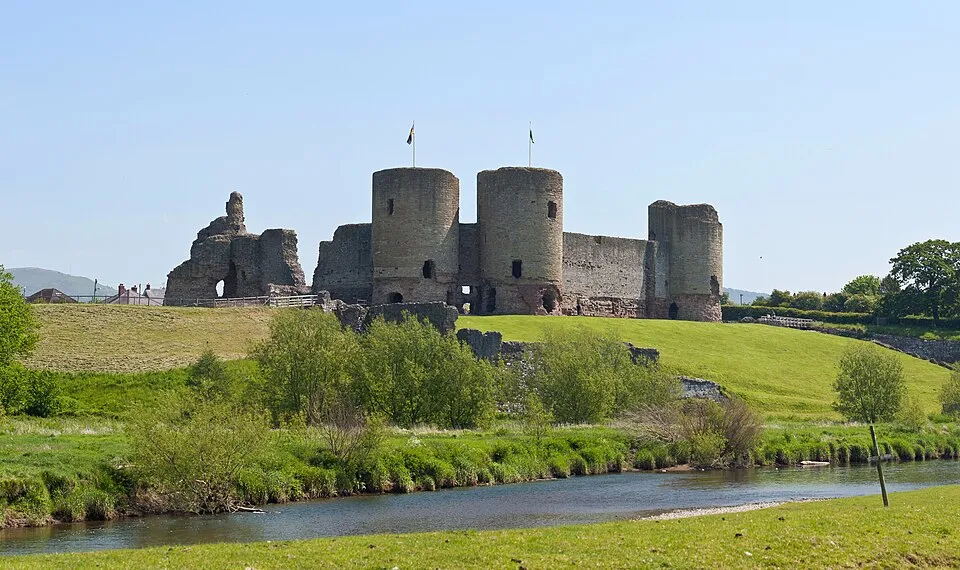
Rhuddlan Castle
Edward I liked Rhuddlan so much he moved the river. His diamond-plan castle on the Clwyd is the most underrated of the great Welsh fortresses — and the least crowded.
- History without the crowds
- Golden-hour photography
- Flat riverside strolls
- Pairing with Denbigh
✅ Walked & checked: July 2026 · themes: Castles & history
Conwy and Caernarfon get the coach parties; Rhuddlan, ten minutes from Prestatyn, gets peace — and it has a claim to being the most consequential of Edward I’s Welsh castles. This is where the conquest of Wales was made law.
What it’s actually like
The approach sets it up nicely: a small green, a dry moat, and then the twin drum towers of the west gatehouse rearing up in blushing local sandstone. Inside, the diamond-shaped inner ward is open to the sky and to interpretation — enough walls and stairs survive to scramble (kids adore it), not so much that you need a guidebook to feel the shape of the place. Down the slope, Gillot’s Tower guarded the dock where ships from Chester and Ireland tied up against the castle wall.
That dock is the thing to stand and think about. The Clwyd below you runs suspiciously straight because Edward moved it — three years of digging by up to 1,800 labourers rerouted the river so the sea could serve the castle. And it was here, in 1284, that the Statute of Rhuddlan annexed the principality to the English crown: arguably no single spot in Wales carries more constitutional weight.
Getting there and parking
There’s a free car park at the castle entrance off Castle Street — the rare Cadw site where parking is genuinely painless. Rhuddlan village has shops and a couple of decent pubs two minutes’ walk away. Check Cadw’s seasonal opening times before travelling; even when the interior is shut, the riverside circuit of the walls is open, free and arguably the best of it anyway.
Make a day of it
Twthill — the original Norman motte that predates Edward’s castle by two centuries — is a free two-minute stroll south along the river. Pair Rhuddlan with Denbigh Castle twenty minutes up the Vale for a two-castle afternoon that out-histories anything on the A55 coast, or cool off afterwards at the Dyserth waterfall.
Common questions
Why is Rhuddlan Castle so important if it's a ruin?
Two reasons. Militarily it pioneered the concentric 'diamond' plan its architect James of St George refined at Harlech and Beaumaris. Politically, the Statute of Rhuddlan was issued here in 1284 — the legal act that annexed Wales to the English crown and governed it for 250 years. A lot of Welsh history runs through this quiet riverbank.
What's the story about moving the river?
True story: Edward employed hundreds of ditch-diggers for three years to canalise the final 2–3 miles of the Clwyd, so seagoing supply ships could reach the castle at high tide. You can still read the unnaturally straight channel below the walls — 13th-century civil engineering hiding in plain sight.
How long does a visit take?
The castle itself is a compact hour: twin-towered west gatehouse, curtain walls, dry moat and Gillot's Tower down by the old dock. Add the riverside path loop and Twthill — the original Norman motte, free, two minutes south — and it's a fine half-morning.
Is Rhuddlan Castle good for photography?
The classic shot is from the riverbank path across the Clwyd in evening light, when the sandstone goes copper and the towers double in the water. Free, and usually yours alone.
Staying over?
Rhuddlan makes a relaxed base for exploring the area — worth staying over to catch an early start or a golden-hour finish.
Browse places to stay near Rhuddlan ↗ opens Booking.com — needs signalNearby, also worth your time
Planning a proper day of it?
The free Explore Wales trip planner chains stops with drive times, checks the weather, suggests campsites, and syncs the plan with your friends — and it all works offline once installed.